

Blog Post
Social Media

Nadine
Wolff
published on:
Social Media Marketing - Tips for Businesses
Table of Contents
Before we dive into the topic of social media marketing here, let's first clarify: what actually is social media? Social media has established itself as an umbrella term that describes a wide variety of digital media, applications, and Web 2.0 technologies.
What they all have in common is that users can interact communicatively on a specific online platform via messages, comments, reactions, or other posts, as well as actively participate in creating media content.
Social media has long ceased to be just a passing fad: social networking is hugely popular and increasingly used on mobile devices. Users search, ask questions, comment, take photos, film videos, and share whatever matters to them with their virtual friends or the entire world.
This behavior is incredibly useful for businesses, as users don't just share personal updates—they also chat with their friends about their favorite products, among other things.
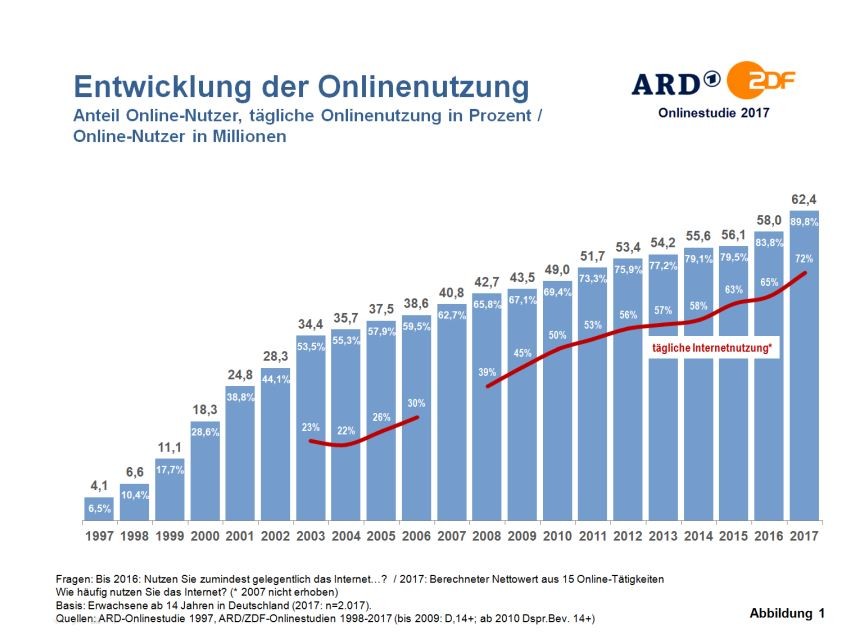
Fig. 2: ARD/ZDF Study
Viral word-of-mouth helps shape opinions and can, of course, spark interest in buying. A satisfied customer is more than happy to recommend products.
Naturally, negative feedback can happen too. But if you take this criticism constructively as a company and fix the issue with the product, you have the opportunity to improve product quality and quickly spread the word about it across social media and its vast reach.
Connected consumers use all available sources of information to find out whether a product or service meets their expectations.
Social media also gives companies the chance to showcase themselves, expand their market, and improve their customer service.
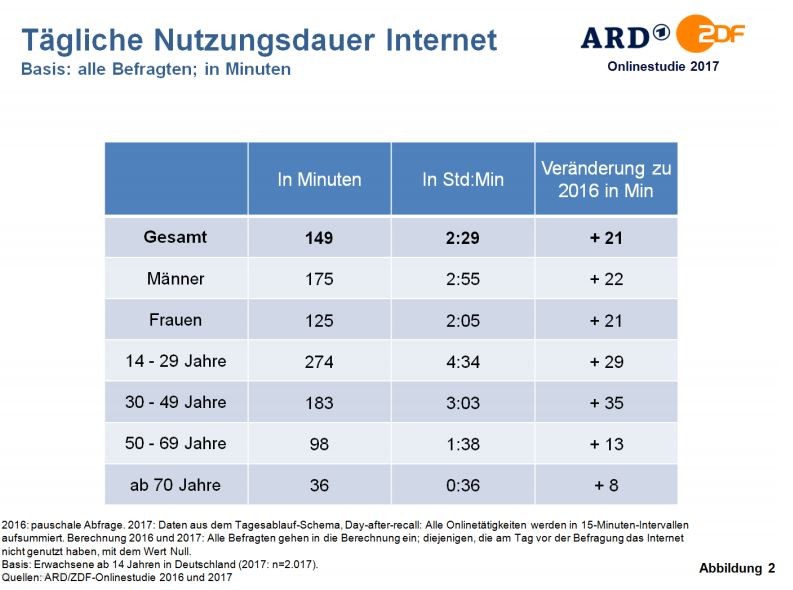
Fig. 3: ARD/ZDF Study
While traditional mass media like TV, radio, or daily newspapers are characterized by one-way communication, social media offers a real-time, multidimensional exchange. Across social media channels, the user is simultaneously a broadcaster and a recipient. Social networks foster a global dialogue and offer a diverse blend of text, images, and video. Technology also empowers users to spread their messages quickly, as access to social media tools is cost-effective. Publishing on social media is immediate and without delay. On top of that come ease of use (usability) and up-to-the-minute timeliness. Social media makes it possible to update published content almost instantly.
Social Media Marketing Definition
Social media marketing is a marketing term describing the strategies and tactics that businesses or organizations use across social platforms to achieve corporate goals. Frequently targeted stakeholder groups in social media marketing include potential customers, employees, bloggers, journalists, or the general public.
Beyond simply using social platforms, social media marketing on a strategic level also encompasses managing a social media culture, defining the role of employees (e.g., through social media guidelines), deciding on the social media scope (e.g., active vs. passive use), and organizational integration within the company to meet business objectives.
For this reason, management research views social media marketing as an interdisciplinary, cross-departmental concept.
Social media marketing is therefore defined as a branch of online marketing. Yet, it's about much more than just drafting ad copy that pulls high click-through rates or generates conversions.
Social marketing is designed to strengthen the dialogue with your customers. Social media engagement and community spirit are key here. Social media marketing offers the chance to gain honest, authentic customer feedback without having to hire market research agencies.
What Social Media Channels Are Out There?
There is a wide variety of social networks, each with different characteristics, features, user bases, goals, and options for native advertising.
The most well-known and highly successful social network is Facebook, along with its sister platforms Instagram and WhatsApp.
Fig. 4: Facebook Screenshot
The well-known search giant also offers users and businesses the opportunity to showcase themselves with Google+ or YouTube. Networks like Twitter, Snapchat, and Pinterest are just as familiar. The most successful business networks are LinkedIn and XING.
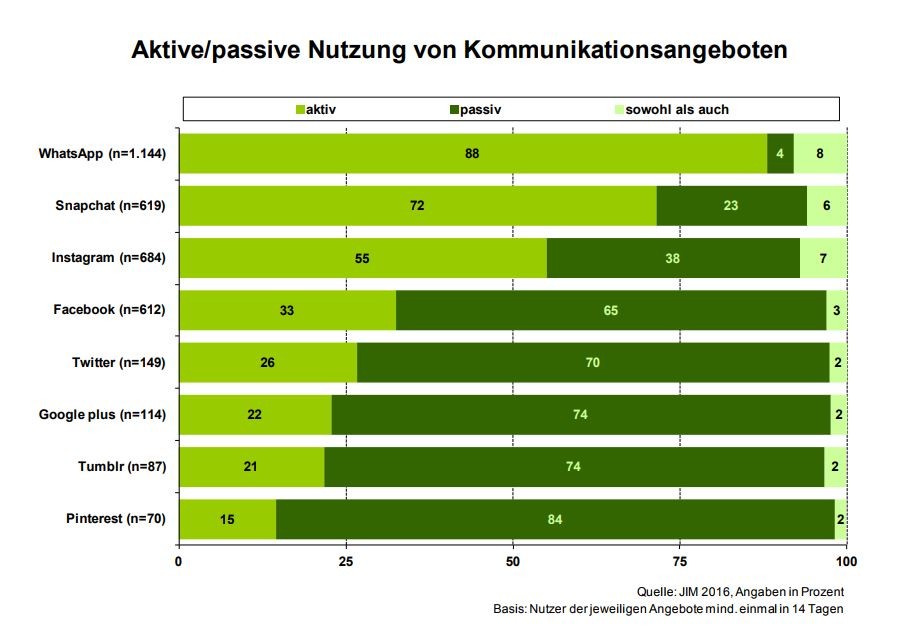
Fig. 5: JIM Study
Now you're spoiled for choice: to run a successful social media marketing campaign, it's essential to explore the unique features and target audiences of each social network. You should also get to know each channel's specific traits inside and out.
Facebook gives friends a way to connect digitally and communicate worldwide. Through Fan Pages, clubs, NGOs, and businesses can also build an active presence. But that's not all: with Facebook Advertising, companies can place highly targeted ads.
WhatsApp and Snapchat are messaging apps. Today, they can also be used for customer service to promptly answer questions, offer support, and even send out special deals to users.

Fig. 6: WhatsApp Screenshot
Instagram and Pinterest are visual networks. While Instagram users primarily showcase their lifestyle, Pinterest is a go-to platform for inspiration. That means users browsing Pinterest are typically ready to buy. Through
influencer marketing, you have a great opportunity to highlight products on Instagram and get authentic feedback from peers within your target audience.
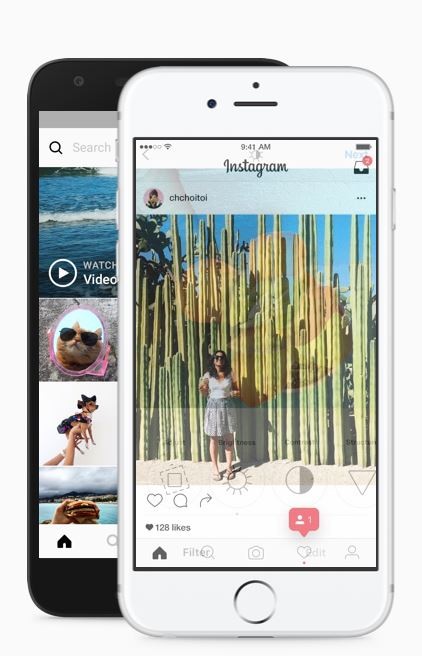
Fig. 7: Instagram Screenshot
When it comes to professional networks like LinkedIn and XING, there are key differences: LinkedIn operates globally, while XING is focused primarily on the DACH region (Germany, Austria, Switzerland).
Furthermore, these platforms are ideal for marketing B2B products and supporting traditional HR management. Job openings can be prominently featured across these networks.
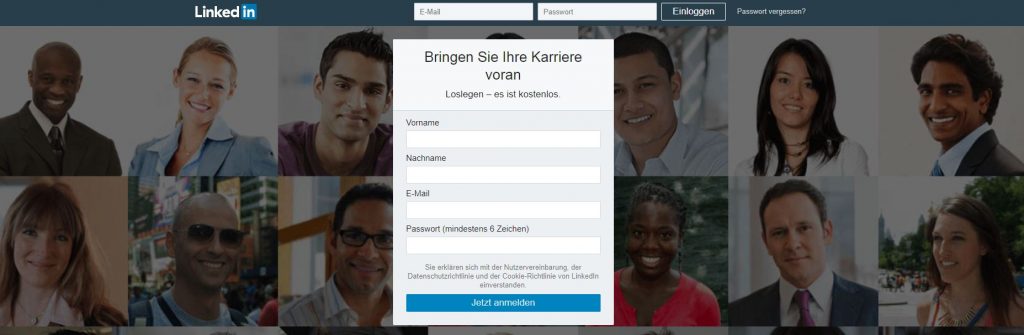
Fig. 8: LinkedIn Screenshot
Pros and Cons of Social Media Marketing
Using social media has become standard practice over the last decade and is now a central pillar of online marketing for many companies. If you're deciding on a social media strategy for your business, it's worth weighing the pros and cons.
The Pros of Social Media
It's entirely possible to achieve more with a leaner marketing budget than through traditional channels like print or TV. You also face less advertising waste and can target your audience on social networks with pinpoint accuracy.
Imagine a prime-time TV evening: during the commercial break, ads run for car brands, beauty products, laundry detergents, groceries, and travel deals. There's a little something for everyone. But can you really measure who ended up buying your product?
With social media channels, you have the power to target your audience as precisely as possible and tailor your ad formats by country.
Let's look at an audience in Germany, for example: on a social network, you can run campaigns that speak to regional nuances, like southern or northern dialects, and deliver your ads using geographic targeting.
The emphasis in social media is on "social"—meaning you get fast, honest, and detailed feedback from your customers, which helps you build closer relationships. You can answer customer inquiries promptly and deliver solutions on the spot.
If you're a forward-thinking, proactive company, you can also leverage professional networks to recruit fresh talent.
The Cons of Social Media
Social media takes time and effort. Many companies simply aren't ready to invest that. For some businesses, managing social media marketing is a full-time job in itself, requiring new hires. In some cases, outsourcing social media marketing to a specialized agency can be a viable path, though it naturally comes with higher costs.
Networks also evolve over time. Remember Myspace or StudiVZ? Today it's Facebook, Instagram, Twitter, and the like—but who knows which networks will still be thriving tomorrow?
There are other hidden costs, too. Building meaningful customer relationships takes time. Then again, the offline world requires just as much time and effort to nurture customer connections.
Social Media Marketing Strategy
Once you've decided to embrace social media marketing, developing a clear social media strategy is essential. There are several social media marketing strategies you can align directly with your business goals.
Increase brand awareness
Boost brand loyalty
Drive community interaction
Achieve greater reach and tap into new target groups via fresh communication channels
Use viral campaigns across the social web to boost brand engagement
Showcase a positive corporate reputation and prevent negative sentiment
Conduct market research via social media to gather valuable consumer insights
Improve customer service and boost customer satisfaction
E-commerce: sell products directly through social networks
Product development: use crowdsourcing to develop new product ideas
Fund projects together with your community through crowdfunding
The best way to define a social media strategy is by using the POST method. POST stands for "People," "Objectives," "Strategy," and "Technology."
In other words: start by analyzing your target audience, derive your goals from there, map out your social media marketing strategy, and finally select the right technology for monitoring.
Defining Target Audiences
Always start with your customers. The best approach is to find out where and how actively your customers spend time on the social web. Which social platforms do they use? Do they write blog posts, share photos, or prefer watching videos online? Where do they go to research your products? What information do they want or need to feel confident making a purchase?
How do you gather all this information? Internet usage studies can be a huge help—such as the ARD/ZDF Online Study, the KIM and JIM Studies, or the Shell Youth Study. The Sinus Institute also provides relevant, detailed insights into your target audience.
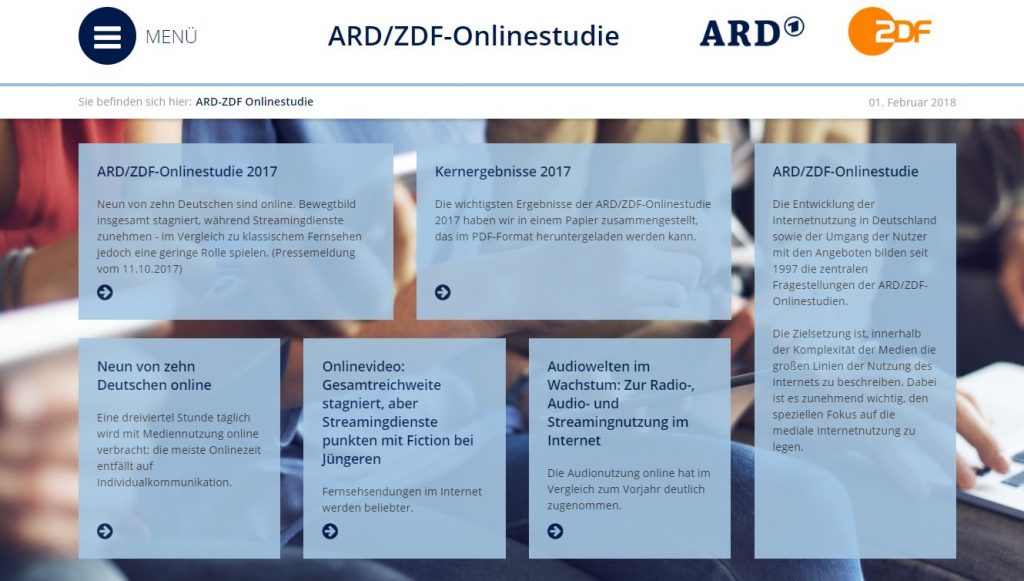
Fig. 9: ARD/ZDF Online Study
Setting Goals
You set your goals based on your prior audience analysis. Depending on your target group's demographics, you can leverage different platforms. Social media marketing isn't just about defining your audience by age and gender; it's about sparking a genuine desire for communication, interaction, and participation.
So, how do you define your goals within a social media strategy? Much like in traditional marketing, you can establish qualitative communication goals (brand image)—measured through metrics like users, impressions, likes, and reactions—as well as quantitative marketing goals.
Be sure that your goals are specific, measurable, achievable, realistic, and time-bound. Sound familiar? That's right—to set realistic goals, you can look to a SWOT analysis. This acronym stands for Strengths, Weaknesses, Opportunities, and Threats.
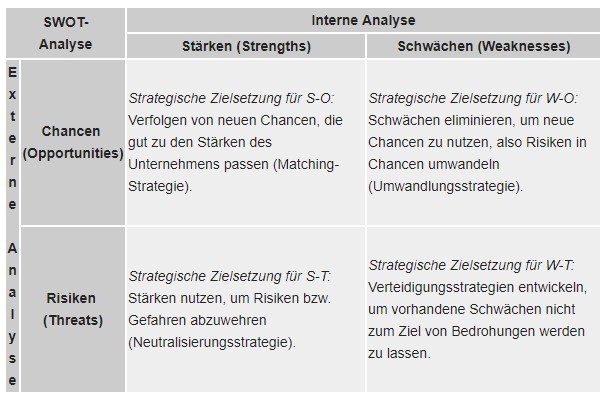
Fig. 10: SWOT Analysis
Start by outlining your qualitative goals. These might include:
Brand awareness and branding
New product positioning
Community engagement
Improving online reputation
Enhancing customer service
Customer acquisition
Here are the key metrics you can track to measure these goals:
Impressions / reach / views
Content created, such as blog posts, reviews, and comments
Inquiries, contacts made, online orders
Shares (shared content), clicks
Fans, followers
Downloads: tutorials, videos, podcasts, etc.
For truly successful social media marketing, you'll also need a few extra tools in your toolkit.
An editorial calendar helps you put your social media strategies into action and hit your targets. It provides planning reliability and makes sure you never run out of ideas or content. Social media guidelines are just as crucial. They teach and reinforce key social media skills, regulate social media activities, and clarify legal questions, including privacy and copyright policies. On May 25, 2018, the General Data Protection Regulation (GDPR) came into effect. It governs the processing of personal data by private companies and public authorities across the EU. Its goal is to safeguard personal data within the European Union while ensuring the free flow of data across the European Single Market.
A social media marketing manager won't necessarily know every legal detail inside out. By establishing clear, compliant social media guidelines for your company, your team will have an easy-to-understand roadmap to follow and act with confidence.
Social Media Monitoring
A vital part of any winning social media strategy is social media monitoring. Monitoring simply means tracking specific topics, key players, or keywords across the web. It serves both target audience research and ongoing market and brand analysis. It's often smart to use several tools side by side for effective monitoring.
Alongside free options, bringing in a paid tool can be well worth the investment. The real perks of paid tools usually lie in their rich variety of filters, powerful features, and in-depth reporting.
To get a solid initial overview, Google Alerts is a great starting point. With Social Mention, you can easily filter results across various social media channels.
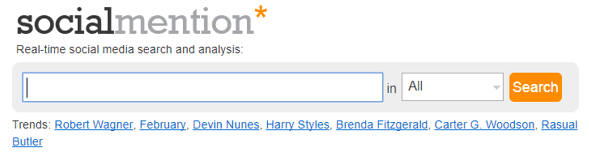
Fig. 11: Social Mention Screenshot
A few of our favorite paid tools include:
BuzzStream
Brandwatch
What Can Social Media Do for Your Business?
Social media marketing isn't a magic cure-all for boosting sales overnight. Social network marketing isn't a one-way street—it's a conversational tool. It helps you build and deepen strong customer relationships while showcasing your brand with authentic transparency. Plus, it lets you present your company in the best light and powers your recruiting efforts.
By staying active on social media, you can gain a real competitive edge and get direct, invaluable feedback from your customers.
In summary, social media marketing gives you the opportunity to achieve a wide range of business goals:
Increase brand awareness
Improve customer retention and customer service
Boost search engine rankings
Streamline social communication (reach your audience fast with social signals)
Drive e-commerce sales via social networks
Support recruiting and human resources
How Can We Help You?
We'd love to help you craft your social media marketing strategy or work with you to launch engaging campaigns. Get in touch with us—our social media experts are always happy to help!
Nadine
Wolff
As a long-time expert in SEO (and web analytics), Nadine Wolff has been working with internetwarriors since 2015. She leads the SEO & Web Analytics team and is passionate about all the (sometimes quirky) innovations from Google and the other major search engines. In the SEO field, Nadine has published articles in Website Boosting and looks forward to professional workshops and sustainable organic exchanges.
