


Blog Post
Search Engine Optimization

Nadine
Wolff
published on:
Featured Snippets: How to Capture Position 0 in Search Results
Table of Contents

Since last year, featured snippets have become the new trend in organic search results. Even so, many website owners are still unfamiliar with the term.
In this article, we’ll break down what featured snippets actually are, explore the different formats they come in, look at why Position 0 is so valuable, and show you how to structure your website's content to land that coveted spot in the search results.
What is a Featured Snippet?
Most people are familiar with traditional keyword-based search results on Google. It's also well known how a page should ideally be optimized to rank as high as possible in the search results—usually with the top spot in mind.
Things work a bit differently, however, once a user types a complete question into the search bar. Recently, Google has focused on giving users direct answers rather than just presenting a list of pages that might answer them. The answer to the query is now displayed in a dedicated block—the featured snippet—right above the regular organic search results. Because it doesn't push the standard results off the page, this spot is often referred to as Position 0.
This answer box features an extracted summary from a webpage that answers the query concisely. Along with the snippet, the box also displays the title and link to the source webpage.
By the end of 2017, featured snippets appeared in about 4% of all Google searches. Sistrix took a closer look at this trend and found that featured snippets had jumped by 64% since mid-2017. STAT, on the other hand, focused on how often different formats are shown. According to their findings, 60% of answer boxes appear as pure text, 29% feature lists, and 11% are shown as tables. A featured snippet is simply a summary or excerpt from a webpage that Google automatically selects and displays whenever a user asks a question in the search bar.
Featured Snippets: What Formats Are There?
Generally, featured snippets can be divided into five distinct formats. These include:
Regular text snippets
Snippets with text and an image
Step-by-step guides or lists
Table snippets
Video snippets
Featured Snippets with Text
As the name suggests, a standard text snippet consists purely of text. It gives users a quick, concise answer in just a few sentences. For more details, users can simply click the link to read the full page. We showcased an example of this in the screenshot above.
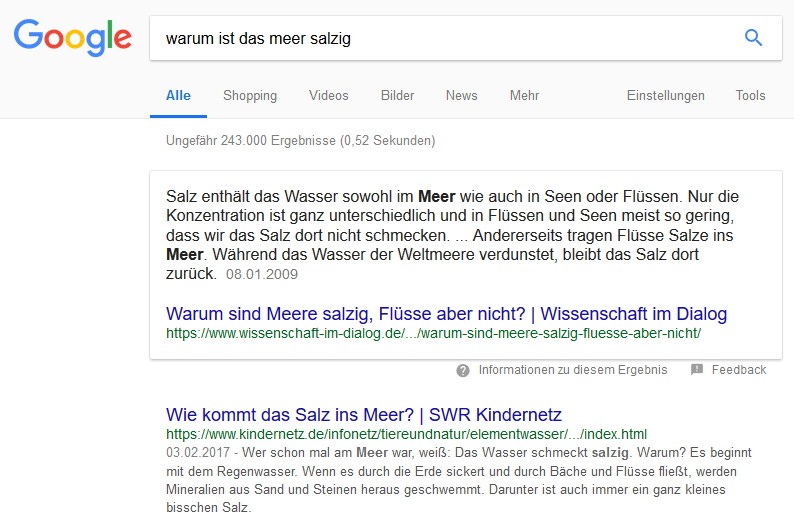
Fig. 2: Text featured snippet
Featured Snippets with Text and an Image
When relevant, Google will often display a matching image alongside the highlighted text answer. Interestingly, this can even happen if the featured page itself doesn't include an image on the topic.
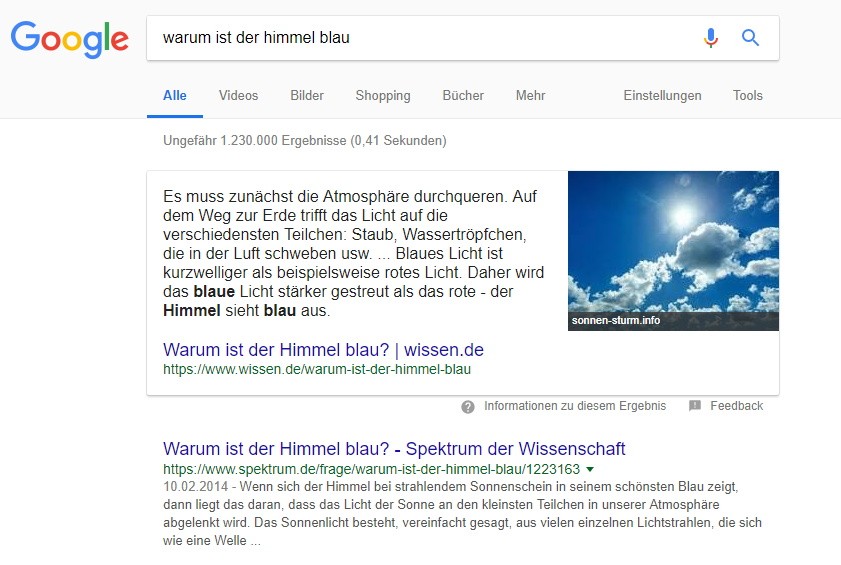
Fig. 3: Featured snippet with text and an image
Featured Snippets as Guides or Lists
For many “how-to” questions, presenting the answer as a list or a guide inside the box works best. Users get their answer straight away as a step-by-step guide. The answer doesn't even have to be formatted as a list on the actual webpage—Google can generate the list directly from the text. These list snippets can also include images.
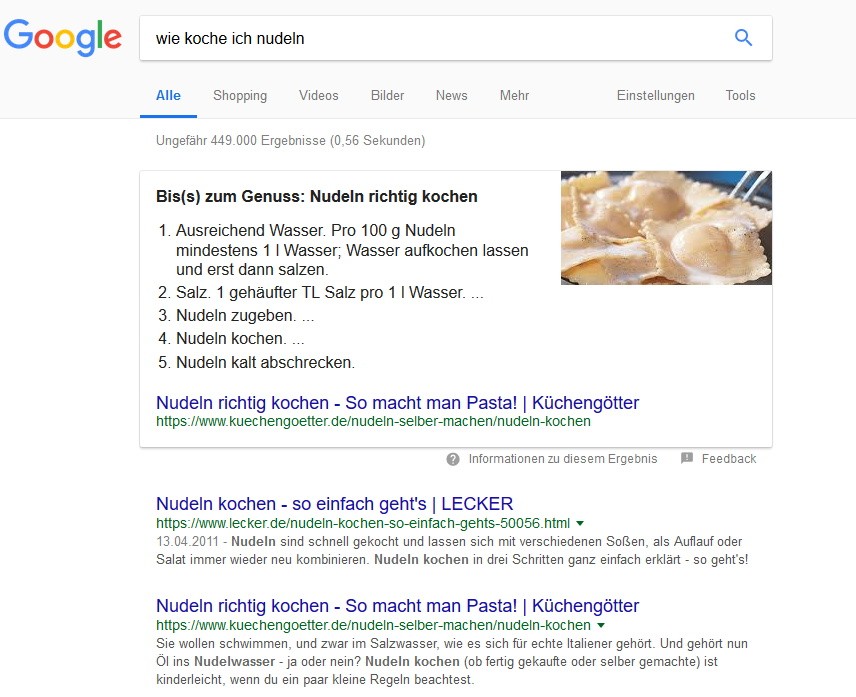
Fig. 4: Featured snippet for step-by-step guides
Featured Snippets as Tables
Another popular format for Position 0 is a table. Questions that are best answered with data—or that involve comparative information—are often displayed as a table in the featured snippet.
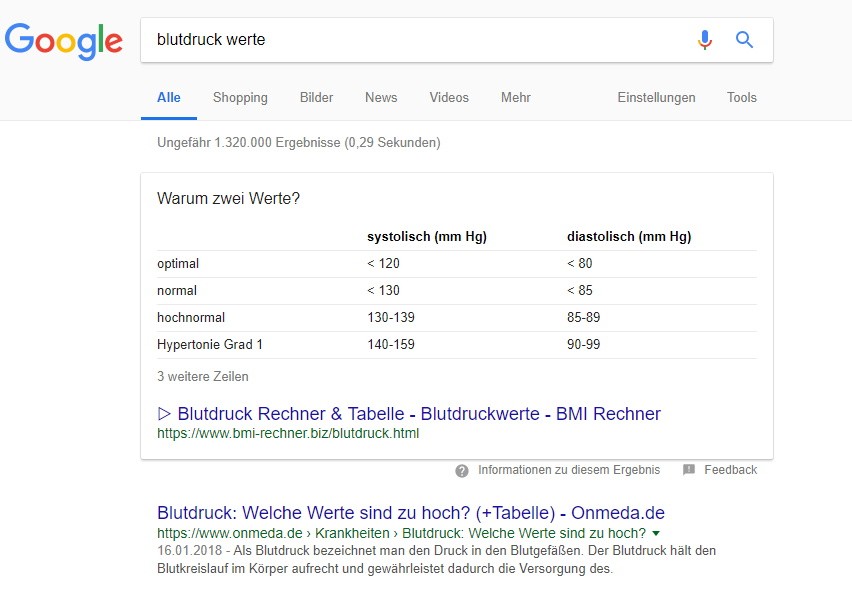
Fig. 5: Table featured snippet
Featured Snippets as Videos
Some questions just can't be easily answered with text, no matter how it’s formatted. In these cases, Google opts to showcase a video in the highlighted box—usually pulling from YouTube.
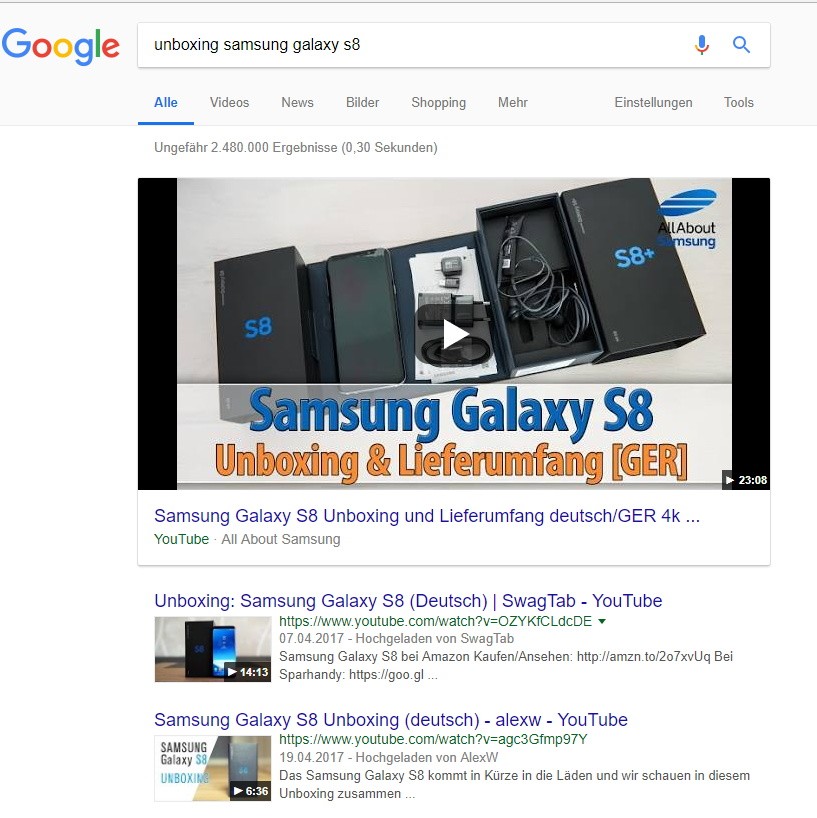
Fig. 6: Video featured snippet
What Are the Benefits of Featured Snippets?
The main perk of featured snippets is that your page lands on the coveted Position 0, appearing above all other search results. On top of that, users get a fast, simple answer to their question. Keep in mind that the results for Position 0 and Position 1 are not the same.
This means your page doesn't necessarily need to hold the #1 rank to appear in Google's answer box. It gives you a fantastic opportunity to push your content right to the very top, even if your page wouldn't otherwise rank on page one.
Overall, Position 0 can provide a noticeable boost in traffic and click-through rates. However, featured snippets can sometimes lead to fewer clicks on your link, simply because the question was already answered right inside the box. According to a study by Ahrefs, this can reduce clicks by up to 18.5%.
How Can You Optimize Your Page for Featured Snippets?
Figuring out how to earn a featured snippet isn't entirely straightforward. Unlike rich snippets, the answer box can't just be tagged using structured data in your source code. Instead, Google evaluates the overall quality of the content on the page to decide which one earns the snippet.
A great starting point is to see which search queries already trigger answer boxes on Google. Taking over an existing, perhaps subpar result with your own page is much easier than winning a featured snippet for a query that doesn't have an answer box yet.
It also helps if your page is already ranking in the top 10 for the query. Once those two boxes are checked, the next step is to optimize your content as best as possible. To increase your chances, make sure you use the exact keyword in a heading or naturally within your text. Even tiny variations in spelling can make a difference here. Trigger words are also very helpful—your specific choice of words plays a big role in landing the answer box. For definition snippets, for instance, clear and simple sentence structure is key. To appear in a how-to snippet, it’s smart to use trigger words and action-oriented follow-up phrasing. Your best bet is to pair descriptive or introductory phrases with words like "use," "find," "do," and so on. For list snippets, using clean HTML formatting for lists and tables right in your content is highly recommended. Ultimately, optimizing your on-page SEO factors isn't just essential for ranking well in general—it's especially crucial for earning featured snippets.
How to Opt Out of Featured Snippets
While ranking on Position 0 offers plenty of perks, it can sometimes cause a drop in clicks. If your site already enjoys strong visibility and high rankings, and you'd prefer to avoid potential traffic drops from featured snippets, you can disable this feature in your source code. All it takes is a short meta tag in the page's header:
<meta name="googlebot" content="nosnippet">
Once this tag is added to your page's source code, Google will no longer consider it for featured snippets.
How Can We Help You?
Are you looking for an agency to audit and optimize your website using the best SEO practices? Feel free to reach out to us! We look forward to hearing from you.
Nadine
Wolff
As a long-time expert in SEO (and web analytics), Nadine Wolff has been working with internetwarriors since 2015. She leads the SEO & Web Analytics team and is passionate about all the (sometimes quirky) innovations from Google and the other major search engines. In the SEO field, Nadine has published articles in Website Boosting and looks forward to professional workshops and sustainable organic exchanges.
