

Blog Post
Growth Marketing

Nadine
Wolff
published on:

Trademark Form: How You Can Protect Your Brand
Table of Contents
Anyone involved in product development or founding a company simply can't ignore the topic of trademark protection. To ensure that your product idea isn't used by others, company names, products, and brands should be protected.
By registering a trademark with the responsible patent and trademark office, you obtain trademark protection for your product or company. Trademark protection forms can be completed for protection within Germany, the European Union, or internationally. However, for a trademark registration to be granted, certain absolute and relative grounds for refusal must be addressed.
Here, you'll learn what lies behind the term "trademark," when it can be registered, and how the registration process works.
What is a trademark and what grounds for refusal exist?
What is a trademark and when does it deserve protection? This question arises particularly when choosing a company name, registering an internet domain, or designing a company logo. Simply put: A trademark stands for the name of a product. Products refer to goods or services, which can range from clothing and consumer electronics to running a business.
However, trademark protection is only activated once the trademark has been officially registered through an application. Words, letters, numbers, images, colors, and sound marks are permitted for a trademark application. The following types of marks are possible:
Word marks: for example, "After Eight"
Figurative marks: for example, the Audi rings
Combined word and figurative marks: for example, the Coca-Cola logo
3D marks: for example, distinctive packaging like Toblerone
Sound marks: for example, radio jingles
Color marks: for example, Telekom magenta
Please note that not all signs can be protected as a trademark. For example, signs that merely describe goods and services cannot be granted protection. The protective effect takes place once the trademark is registered in the trademark register. In principle, trademark protection can also be established without registration through the use of the mark in commerce. However, the requirements to be met here are very high and difficult to prove. Therefore, if you want to play it safe, it's best to properly register your trademark in the trademark register.
Nonetheless, several grounds for refusal must be navigated even during official registration. Here, absolute and relative grounds for refusal must be taken into account. Absolute grounds deal with the general capability of a sign to function as a trademark, while relative grounds address already existing trademarks and identifiers. Here, it is examined whether existing registrations conflict in any way with the registration of a new trademark.
Absolute grounds for refusal / protectability checks:
Examination of trademark capability
Examination of the distinctiveness of the mark, service, and goods compared to other companies
Examination of the goods, services, and the form of the mark
Examination for misleading designations
Examination of whether there is a breach of public policy, morality, state emblems, or official test marks
Examination of whether the trademark is filed in bad faith
To better understand absolute grounds for refusal, here's an example: The word mark "Apple" cannot be protected by a fruit merchant for their goods and services, as this is a purely descriptive term that needs to remain freely available. For the computer and software manufacturer, however, things look completely different, which is why the registration of that trademark is permitted.
The situation is also different with descriptive adjectives like "super," "great," and "classy." Regardless of the goods or services being registered, these terms are always purely descriptive and not eligible for protection. But there are exceptions here, too—if such a word is embedded in a graphic representation, for example, it can satisfy the absolute requirements as a combined word and figurative mark. So, if a pure word mark fails to get registered, it might well be worth considering creating a corresponding combined word and figurative mark.
On the other hand, there are relative grounds for refusal. Here, it is checked whether the trademark to be registered potentially infringes on the property rights of third parties. An important point to keep in mind is that the German Patent and Trade Mark Office does not examine this factor.
If your trademark shows similarities to existing registrations, that's by no means an immediate reason not to apply. However, it usually requires a careful selection of classes or careful wording of the list of goods and services to avoid potential conflicts.
As a rule of thumb: The more similar the signs are, the more distinct the goods and services should be. If the goods and services are identical, it is especially important that the trademark names differ significantly from one another.
How long does trademark protection last and what are the costs?
Developing a product or brainstorming a brand name takes a fair amount of time. Checking for potential obstacles to protection also takes some research and effort before the trademark can be registered. So it's all the more interesting to know whether all the effort is truly worthwhile in the long run.
If you register your trademark with the German Patent and Trade Mark Office, you receive trademark protection for your identifier for 10 years. Would you like to continue protecting your trademark after this period expires? Applying for a renewal is much easier than the initial registration.
For a renewal fee, you can extend your trademark protection for another 10 years. As long as you take advantage of regular renewals, your trademark protection will never expire. The effort of the initial registration is therefore well worth it in the long run.
This brings up the question of costs. What expenses can you expect when registering a trademark in the register? To make sure everything runs smoothly with your trademark application, it is advisable to consult an attorney specializing in trademark law or to hire a patent attorney directly. Independent of attorney fees, application fees are incurred when filing a trademark.
The amount of the fees depends on the number of registered Nice classes. Trademark registration with the German Patent and Trade Mark Office costs €300 for up to three Nice classes. If you opt for the electronic application, you can even save €10. If you need more than three Nice classes for your application, each additional class costs €100.
Would you like to protect your trademark outside of Germany as well, for example within the EU? In that case, the European trademark office EUIPO charges a fee of €850 for the first Nice class. An additional fee of €50 applies for the second Nice class. From the third class onward, each additional class costs €150.
Want to go a step further and protect your trademark internationally? Here, the fees depend on the chosen countries where the trademark should be protected. In any case, basic registration fees apply. These amount to CHF 653, which is currently around €567. In addition to the basic fee, individual country fees also apply.
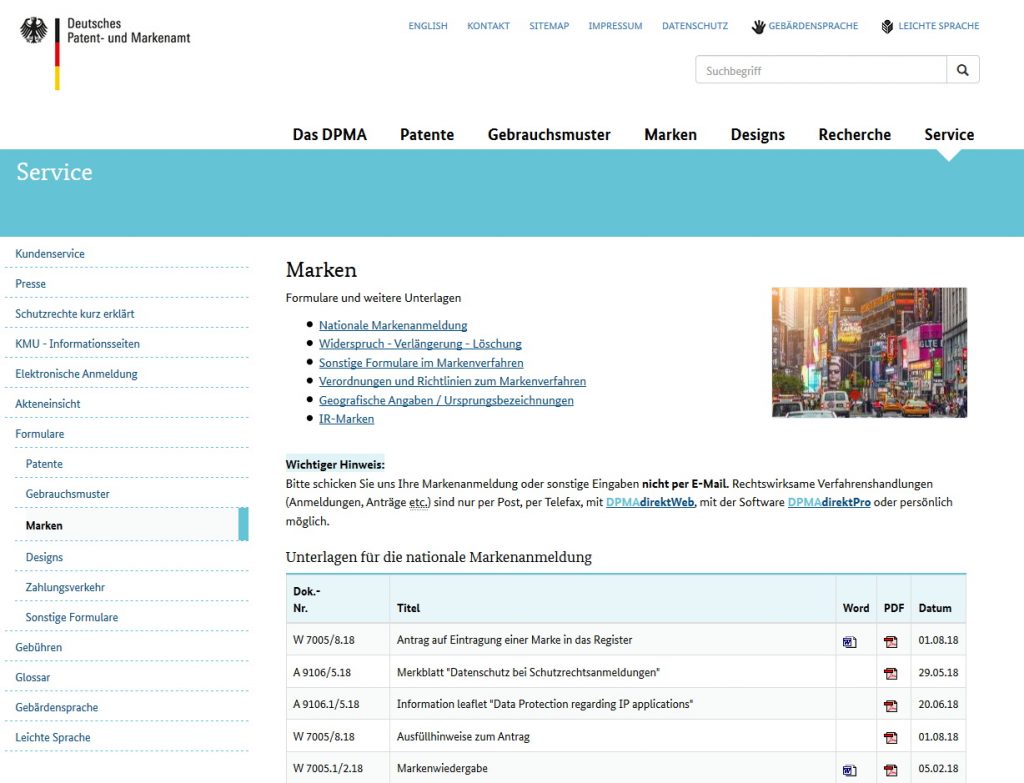
Fig. 2 Overview of trademark protection forms
Protecting brand names: How does the registration process work?
Now that the basic requirements and costs for a trademark application are clear, the next question is the application procedure itself. First, you need to clarify which countries your trademark should receive protection in, as this determines which trademark office handles the registration. Do you want your trademark protected within Germany? Then the application is submitted to the German Patent and Trade Mark Office (DPMA).
Another option is registering a European Union trade mark, which applies protection throughout the EU. Additionally, the mark can also be registered in the trademark register of other countries, protecting it internationally as well.
If you decide to file a trademark application in Germany, the DPMA offers three ways to do so:
Trademark application via online form
Trademark application by mail with a written trademark protection form
DPMAdirekt: Online application with signature
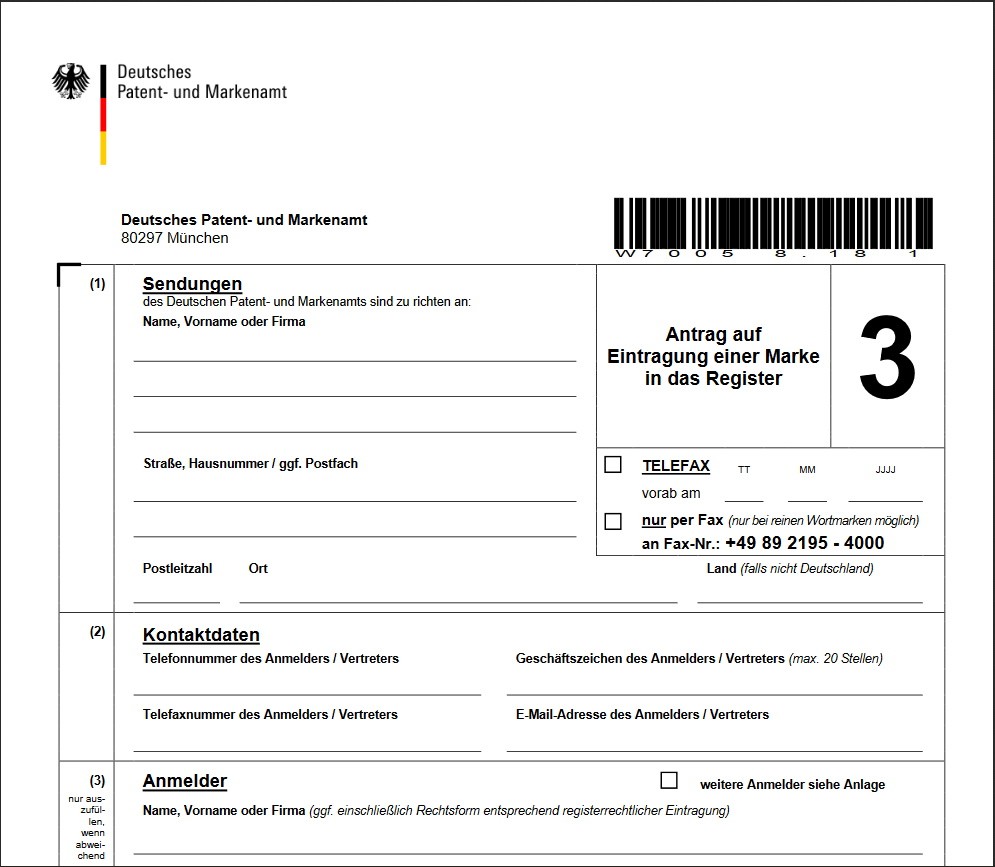
Fig. 3 Template for trademark protection form
In any case, a trademark protection form must be filled out. The information required for a trademark application is very similar across all three methods:
Who the trademark application is for. Your details are required here.
Submission of the trademark to the DPMA in the exact form in which it will be used later. Pay close attention to the formatting guidelines for written and electronic submissions, which must strictly be followed.
Specifying the Nice classes for your goods and services.
Once the request is submitted, the German Patent Office examines the trademark application for absolute grounds for refusal. Registration can take place within just a few business days. Examination and entry into the trademark register are usually completed within six months at the latest. Would you like to speed up the registration? You can request expedited processing for a fee of €200.
Conclusion
Trademark law and registering a trademark can be quite complex and may take time in individual cases. However, protecting your brand name offers numerous advantages and pays off in the long run.
Anyone who registers their trademark or internet domain in the trademark register protects it against third-party challenges. A trademark application provides peace of mind when using your own product name. A registered trademark ensures that your products stand out distinctively from those of your competitors.
A registered trademark guarantees brand recognition among customers. Last but not least, a trademark application helps you transfer a positive brand image, paving the way for effective customer loyalty.
Have you already registered your domain as a trademark? We would be delighted to assist you with finding the optimal marketing strategy moving forward. We're also happy to help with the search engine optimization of your domain. We look forward to hearing from you.
Nadine
Wolff
As a long-time expert in SEO (and web analytics), Nadine Wolff has been working with internetwarriors since 2015. She leads the SEO & Web Analytics team and is passionate about all the (sometimes quirky) innovations from Google and the other major search engines. In the SEO field, Nadine has published articles in Website Boosting and looks forward to professional workshops and sustainable organic exchanges.
