

Blog Post
Growth Marketing

Nadine
Wolff
published on:

Retargeting in Affiliate Marketing - What Matters?
Table of Contents
In affiliate marketing, there are plenty of publishers ready to boost your online store's performance. Alongside classic content and coupon partners, retargeting publishers have become increasingly prominent and important in recent years when it comes to maximizing your online store's sales.
Let’s take a closer look at what you need to keep in mind to set up a cost-effective retargeting campaign in affiliate marketing.
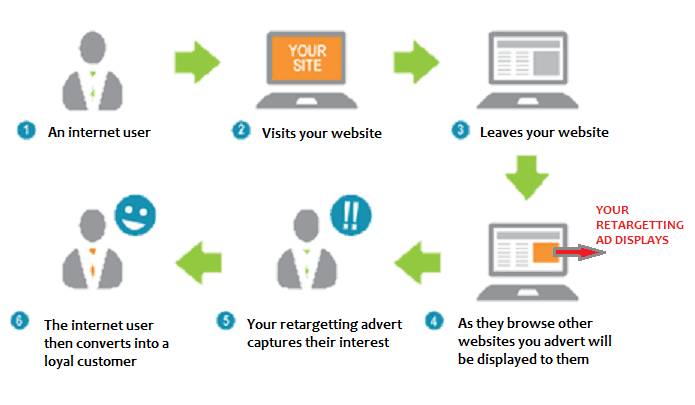
Fig. 1: The retargeting principle
We all know how retargeting works: A user searches online and ends up browsing your shop, but doesn't complete the purchase right away. Naturally, you'll want to re-engage that customer to encourage them to finish their order later on. This is where retargeting publishers come into play. By placing a pixel on your website, they can target that exact customer with various banners. To do this, they often use pre-purchased display slots where your ads will appear. Since publishers charge a premium for these display placements in affiliate marketing, it's crucial to make sure your tracking is set up correctly from the start.
Today, there are a variety of providers using sophisticated algorithms to reach shoppers right at the critical Point of Sale (POS). Online store owners aren't always aware that while retargeting publishers offer many benefits, they can quickly turn into a cost trap if you don't fully understand how they operate.
Keeping an eye on attribution models and costs
Let's say we're managing Client X and working together to build a well-structured sales campaign. Alongside affiliate marketing, the client also invests a significant portion of their budget into SEO and paid search to secure top rankings on Google. For affiliate marketing, we bring network XY on board to track, analyze, and commission all incoming leads and sales. At this stage, you shouldn't just casually add retargeting publishers to your program, as this can easily lead to double commission payouts across different channels.
Let’s think about where the customer actually came from. By running a touchpoint analysis in Google Analytics, you can trace the entire customer journey back to the beginning. You'll often find that the customer didn't arrive solely through your affiliate channel, but had already interacted with other touchpoints like Direct, Paid, or even Retargeting along the way.
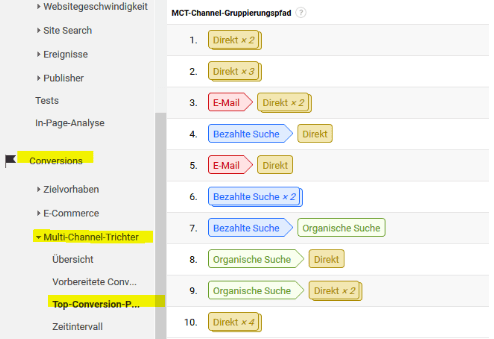
Fig. 2: Multi-channel analysis
Ultimately, every touchpoint wants a piece of the pie when a sale happens. The key here is to adapt your attribution model to prevent paying double commissions across channels.
One sensible approach is to split the commission across all contributing channels, or to reduce the payout at the last touchpoint based on how many times the retargeting publisher had to step in before the sale finally closed. Splitting the commission will naturally lower the overall weight of the affiliate marketing channel, since the initial touchpoints occurred elsewhere. However, in the long run, you'll find that this payment model is much clearer and, most importantly, far more profitable for store owners.
Cookie splitters vs. cookie lifetime
Using a cookie splitter (cookie switch) keeps you on the safe side if you're compensating based on a "Last Cookie Wins" model. Looking at the customer journey for our Client X, we will likely see that the shopper interacted with multiple channels. A cookie splitter allows you to ensure that only the channel responsible for the final touchpoint (sale) receives the corresponding commission. If you don't watch this closely, you might end up paying not only an affiliate commission on the sale, but also the CPCs in paid search. This type of double payout to retargeting publishers has driven up cost-to-revenue ratios (CRR) for many advertisers, eating into their store's profitability.
You should also pay close attention to cookie duration and session capping with retargeting publishers. With just a few smart tweaks, you can make sure sales aren't automatically attributed to the biggest retargeting player. Imagine launching Client X's program with several coupon partners offering great deals and discounts. If the last click ends up being credited to the retargeter a few days later instead of the coupon publisher who drove the interest, the numbers simply won't add up.
Session capping lets you control how often an ad is displayed to a user and how long the cookie stays active. In many cases, an overly long cookie lifetime simply isn't recommended.
Pop-ups and layer solutions: the latest trend?
Admittedly, overlay solutions aren't entirely new anymore, but they are becoming increasingly popular and refined by providers. End users appreciate fresh, intuitive touches that make online shopping straightforward and hassle-free. That makes it all the more important to meet customer expectations while still keeping full control over how these new solutions are compensated.
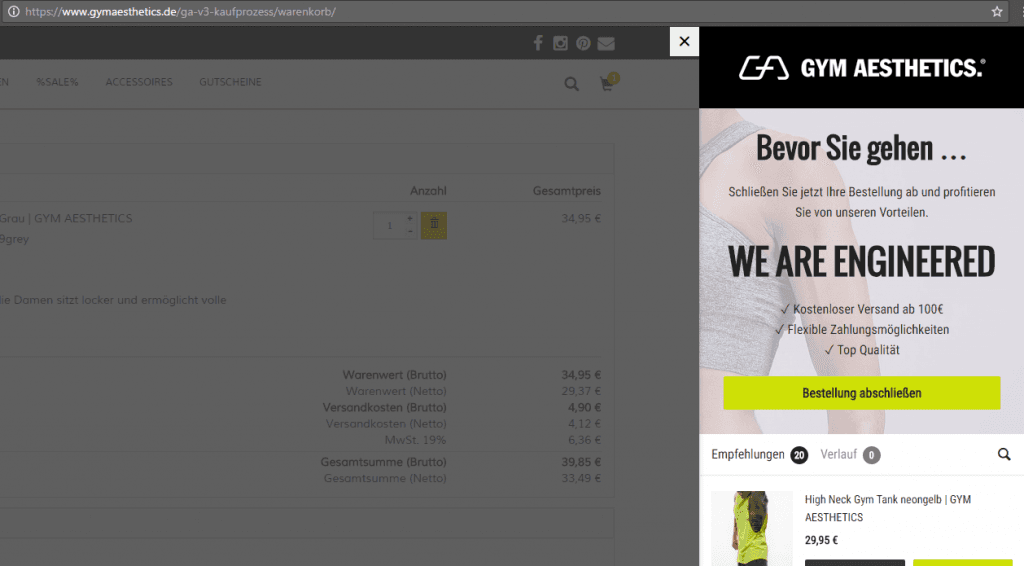
Fig. 3: Layer solutions for on-site optimization
Essentially, these retargeting publishers aim to re-engage cart abandoners right before they leave your store, stopping them from dropping off entirely. This works through various exit-intent triggers. For example, if a shopper moves to close the tab or tries to refresh the page, an overlay automatically appears. The layer can then suggest alternative products, offer an exclusive discount code, or let them conveniently email the cart to themselves for later.
With these on-site layers, you can increase your sales conversion rate by up to 40%—provided you have the right ground rules in place.
Bottom Line
Innovation in affiliate marketing is a great thing! Alongside other essential partners, retargeters can be a huge asset to your performance by leveraging pre-purchased ad space to reach a broad, highly relevant audience. Before launching a retargeting campaign, make sure you know the dos and don'ts so you don't get lost in attribution confusion. A quick tip: start with relatively low session capping during a test phase to see, based on initial data, how effectively a retargeting partner supports your goals. Keep a close eye on the customer journey to truly understand your shoppers. That’s the best way to spend your media budget wisely and get the most out of your campaigns.
How can we help?
Are you looking for fresh ways to push your sales campaigns for 2017? We’d love to help you build an effective retargeting campaign. Feel free to reach out to us!
Nadine
Wolff
As a long-time expert in SEO (and web analytics), Nadine Wolff has been working with internetwarriors since 2015. She leads the SEO & Web Analytics team and is passionate about all the (sometimes quirky) innovations from Google and the other major search engines. In the SEO field, Nadine has published articles in Website Boosting and looks forward to professional workshops and sustainable organic exchanges.
