

Blog Post
Search Engine Optimization

Axel
Zawierucha
published on:
Google Places is becoming Google+ Local (Local SEO Part 5)
Table of Contents
If you want to optimize your website for local search, you simply can't ignore Google Places. However, since the end of May, local business listings have been running under the name Google+ Local—another step Google is taking to further establish the Google+ social network within search results. In addition, these new local profiles are displayed across other Google services, such as Google Maps.
SUBSCRIBE TO OUR NEWSLETTER NOW
Another reason for integrating local profiles into Google+ is the social aspect: businesses can interact much better with customers here, similar to a Facebook fan page. Visually, the Google+ Local listing is also much more attractive than the old Google Places listing. And, of course, Google+ Local is highly interesting for search engine optimization, as these local pages are indexed. This means that businesses can no longer afford to ignore Google+.
What's new?
Listings are still managed via Google Places, but the entries can now be found through local Google+ profiles.
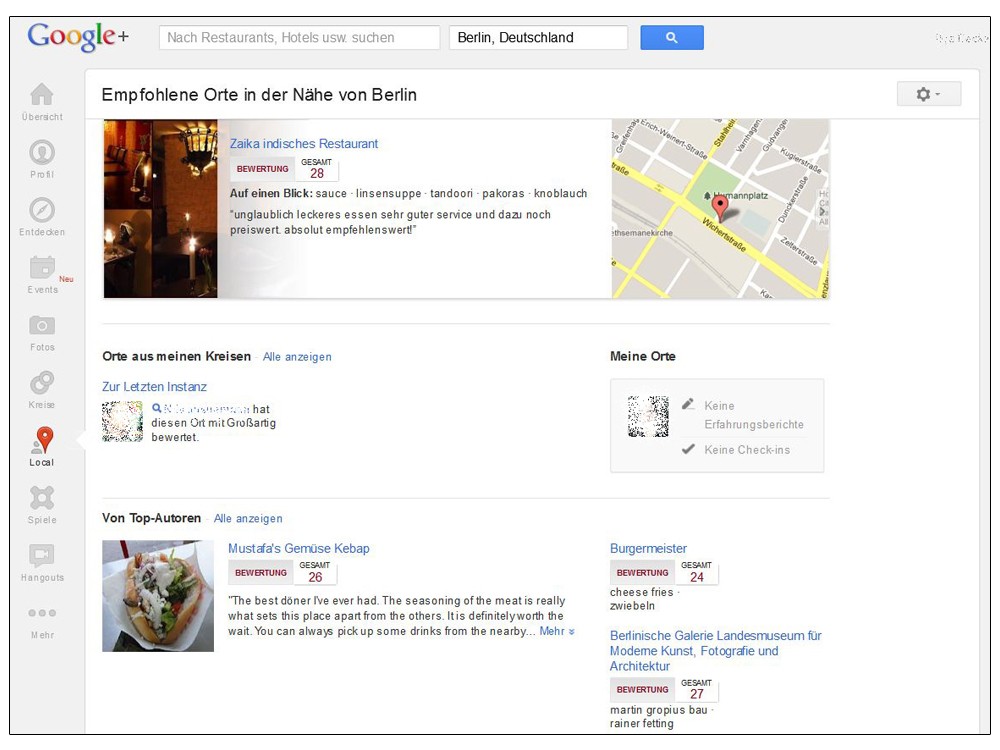
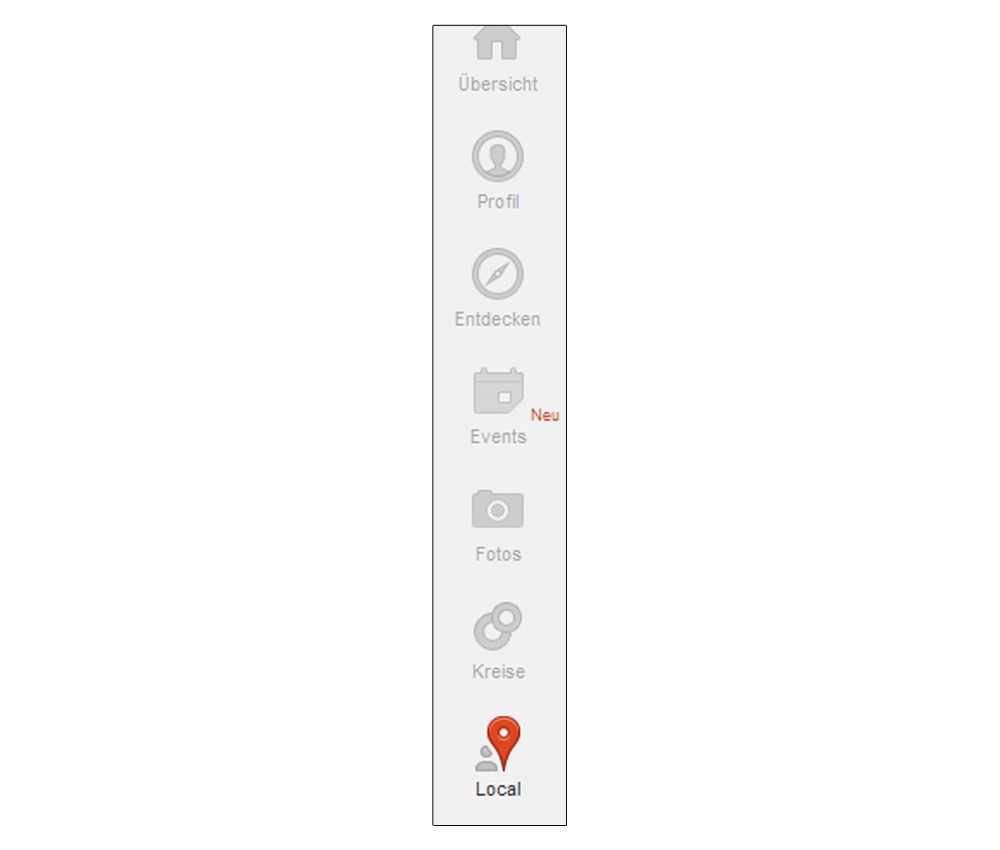
In Google+, the new service can be accessed via the (relatively new) Local tab.
In the business profile, users can upload photos, leave reviews, and share testimonials. Unlike standard business profiles on Google+, a map is embedded in the local listing, displaying details from Places such as the address and opening hours. Popular Google+ features like Hangouts, Posts, and Circles are also available.
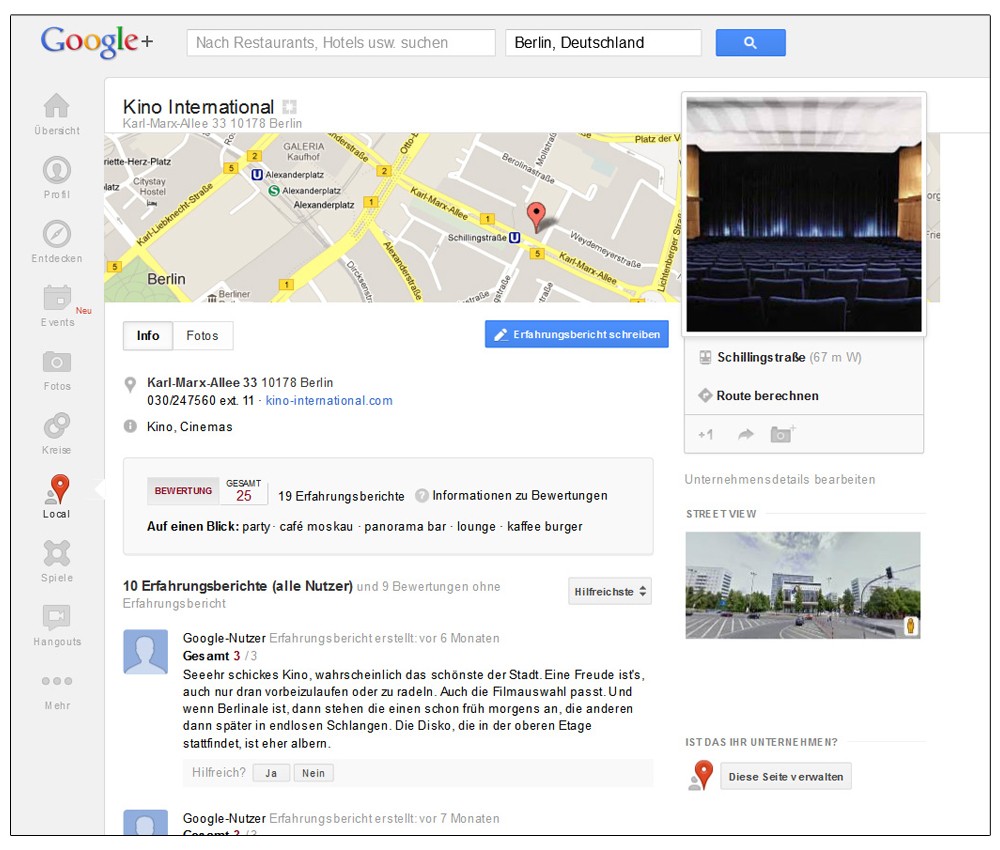
Instead of the previous star ratings, Google is now using Zagat's 30-point scoring system, which assesses various aspects. If there aren't enough user reviews for individual aspects, an overall score is displayed. The biggest change here is that anonymous reviews are no longer possible in Google+ Local. Every review is linked to a profile and, therefore, a name. While this may raise the threshold for leaving thoughtless or negative feedback, it doesn't entirely prevent spam, as creating a Google+ profile is quick and easy.

In addition, reviews from other sources are displayed (which suggests it's worth striving for positive feedback on those platforms as well).
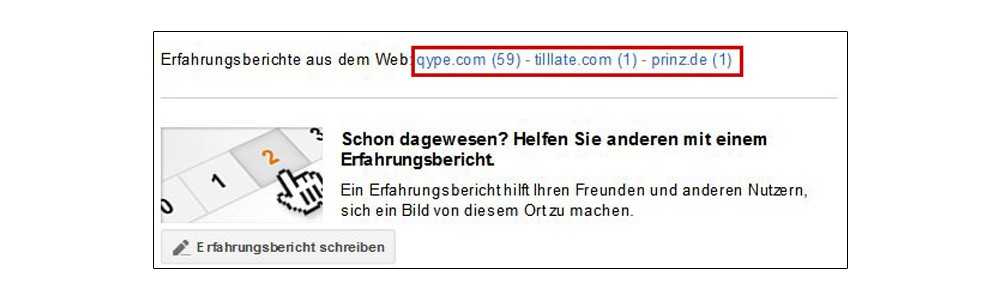
It is also interesting that businesses themselves can write reviews.
Creating or editing a Google Places page
Existing listings can be edited by clicking the "Edit details" link.
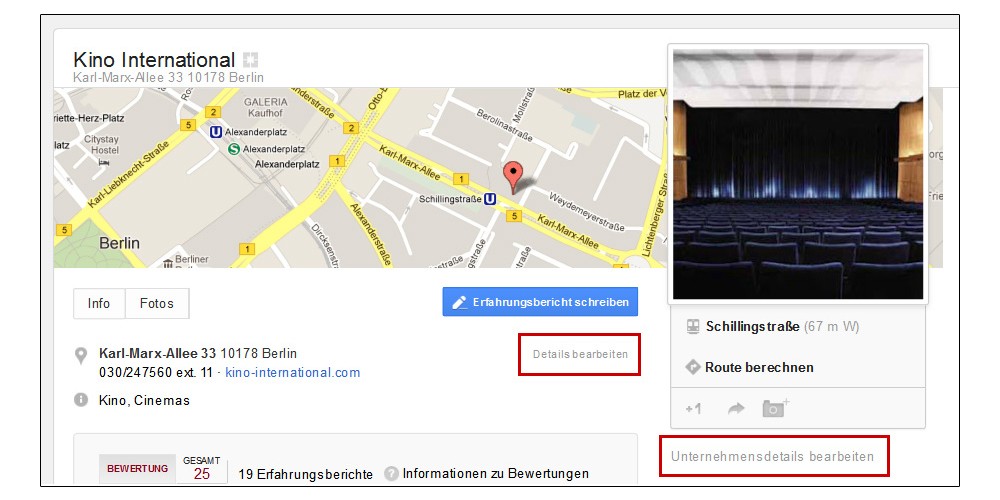
If there is no listing yet, a new Google+ Local page can be created in just a few steps:
Sign in to Google+.
Create a page: "Local Business"
Select or add your business from a list
Enter, confirm, or correct your information
Select a category (see below)
Specify an age restriction
Create the page and add further information (URL, additional contact details, etc.)
The changes or the new listing will be reviewed and will usually go live after a few days.
Google Places Quality Guidelines
One thing that hasn't changed despite Google+ Local: all listings must comply with the quality guidelines for Google Places. Make sure to read and follow these carefully before creating a listing. Here is an overview of the key points:
No marketing slogans or industry descriptions in the business name
A physical address at the registered location; no P.O. box addresses
Preferably a local phone number, not a customer service hotline
Do not create separate locations for service areas; use the "Service areas" option instead.
Only one listing per business, not one listing per area of expertise
If no customers are received at the location, hide the address
Categories should be industries, not products or services
Choosing categories
At first glance, choosing categories for your Google Places profile might seem straightforward: Google suggests categories for you to pick from. However, you shouldn't just casually pick the ones that feel intuitive. Looking at the statistical study on local ranking factors by Bizible, there is a strong probability that the selected categories directly impact your local ranking. Therefore, care and thorough research are essential. Here are a few tips for selecting the right categories:
Keyword research: what terms is your target audience actually searching for?
Analyze which keywords trigger Maps to appear in the search results
Analyze the competition in individual categories (number of optimized listings, categories of top listings)
Select up to 5 categories (at least one of which must be chosen from Google's suggestions)
Choose a broader category as well
Incorporate categories (and synonyms) naturally into your business description
Users can edit business information
One feature that is a bit concerning is the ability for users to edit the details of any business.
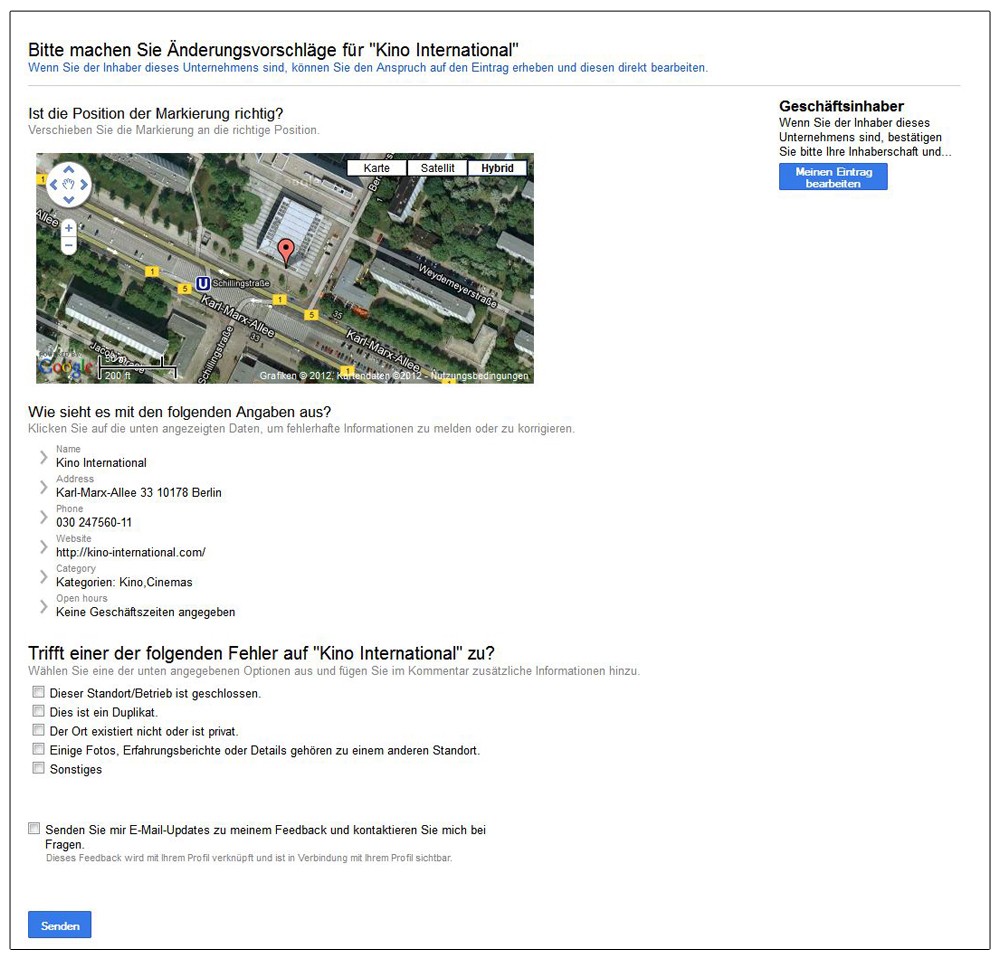
Through this feature, users can suggest various edits, including different categories.
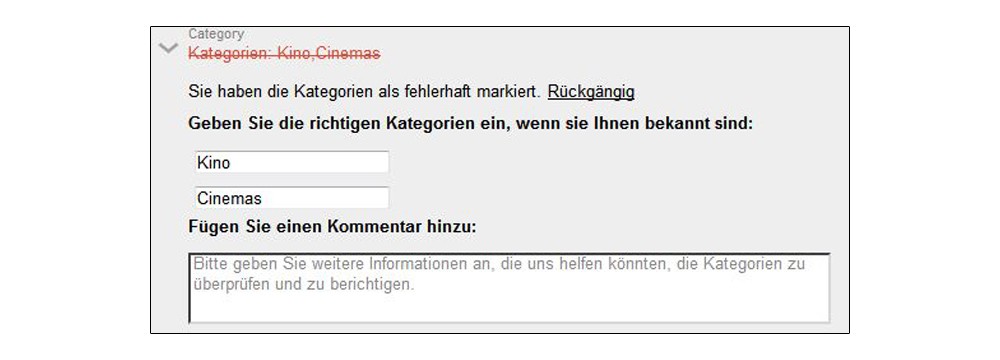
Of course, these changes don't go live immediately—they are reviewed first. Still, it presents some potential for spam, and we can only hope that businesses will be notified promptly about applied changes so they have a chance to appeal.
Ranking factors for Google+ Local
In part three on local on-page and off-page ranking factors, we already covered the most important general factors that can improve (or hurt) your local ranking. For Google+ Local, the following factors are particularly relevant (based on a survey by David Mihm and a statistical study by Bizible):
Physical address in the profile
Appropriate categorization (see above)
Proximity of the address to the center of the location
Local postal code in the profile
Owner-verified profile
Product or service included in the business name (though this can also become an issue and be flagged as spam; see above)
Location included in the business name
Photos associated with the profile
Product or service mentioned in the business description
Location mentioned in the business description
Age of the profile
Number of reviews
Product or service mentioned in customer reviews
A broader category complementing the primary relevant category
A complete list of positive and negative factors can be found on David Mihm's blog, which examines local ranking factors through an annual survey among marketing experts. Although these factors originally applied to Google Places, they remain largely relevant. The specific weighting has likely shifted slightly, though we can only speculate about that for now. The full statistical evaluation by Bizible is also well worth a read.
SUBSCRIBE TO OUR NEWSLETTER NOW
Optimizing your Google+ Local profile
Would you like to register your business on Google+ Local or optimize an existing listing? Our SEO experts would be happy to help. Request a personalized, no-obligation quote today!
Axel
Zawierucha
Axel Zawierucha is a successful businessman and an internet expert. He began his career in journalism at some of Germany's leading media companies. As early as the 1990s, Zawierucha recognized the importance of the internet and moved on to become a marketing director at the first digital companies, eventually founding internetwarriors GmbH in 2001. For 20 years – which is an eternity in digital terms! – the WARRIORS have been a top choice in Germany for comprehensive online marketing. Their rallying cry then and now is "We fight for every click and lead!"
