

Blog Post
Social Media

Céline
Otto
published on:

Sharing needs to be learned – privacy-compliant implementation of social share buttons
Table of Contents

We often come across interesting or funny posts, articles, videos, or images on the internet that we don't want to keep to ourselves and would love to share with our friends on social media. But is sharing content via a share button actually compliant with data protection laws?
The first anniversary of the General Data Protection Regulation (GDPR) is fast approaching, and websites have been brought up to speed. Banners with cookie notices and tracking information have become part of our daily lives, although these banners often pop up right in the middle of the page, covering relevant content and generally being perceived as annoying. People quickly click on just about anything simply to make the content they actually want visible again.
But how has user behavior generally evolved since the introduction of the GDPR?
Do you now pay closer attention to what content you share on social media sites?
Have you noticed that filling out forms now requires checking far more boxes, and that your inbox is full of emails with long legal paragraphs about privacy policies from your favorite e-commerce stores?
The GDPR has significantly impacted social media guidelines in the EU. A topic that remains crucial is social share buttons on websites. Here, website operators share a key responsibility. As has often been highlighted in the past, social media platforms like Facebook don't always handle personal data responsibly. For this reason, it's essential for website operators to take action.
Below, we'll take a closer look at a few important questions:
Is adding social buttons safe and compliant?
What happens behind the scenes?
Is implementing them on my website legally permitted under data protection laws?
We'll answer all of these questions and clear things up. Along the way, we'll show you how to safely and easily add a share feature to your website.
Sharing is Caring
The ability to share media content across digital channels is practically standard equipment for any blog or website. The key to spreading this content is social media channels—with Facebook, Twitter, and WhatsApp leading the way. The effort required to share articles or pictures is minimal: usually, it just takes one click of a button to boost your reach. But what processes are actually running in the background, and how can such a button be integrated into a website?
Share Button: Integration into WordPress or Other CMSs
Adding social share functionality via WordPress or another content management system is quick and easy, with various options and features available. For example, you can implement a counter (a web application that tracks clicks on the site). Alternatively, they can be added as a fixed bar on the page. Plugins offer plenty of design choices that seamlessly blend into your website's layout.
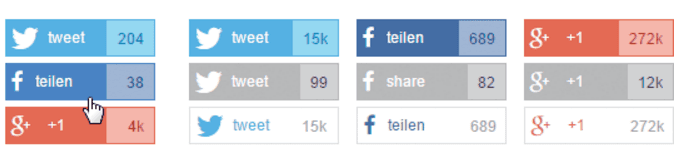
Fig. 1: Various design options | Source: c’t Shariff
As a website operator, you aren't just responsible for your content—you're also responsible for the technical features. You should always ensure that any integrations comply with data privacy regulations. Despite strict GDPR rules, many plugins or extensions that promise a quick and easy setup still fall short in this area.
The Issue Behind Those Colorful Share Buttons
You should carefully consider which extensions you install on your website. When it comes to social media buttons, issues frequently arise where the browser transmits personal data—such as IP addresses, cookies, and other details—to social networks. This happens even if the user hasn't clicked the share button at all.
This occurs because some buttons are embedded as iFrames, meaning they don't actually run directly on your own site and consequently send data straight to third parties.
Users' personal data is also shared simply by browsing websites while still logged into Facebook, Instagram, and similar platforms. This gives social networks access to even more information about the user.
Currently, the question remains open as to whether social media platforms, site visitors, or website operators should bear legal responsibility. A final court ruling on this is still pending.
Solutions for Privacy-Compliant Social Share Integrations
You might be wondering: how can I integrate a share button on my website in full compliance with the rules? Here are a couple of great solutions.
Two-Click Solution
While the two-click solution is somewhat outdated now, it was a staple on many websites for a long time. Following the GDPR, this approach to social share buttons has regained popularity.
With this method, social share buttons are only activated on the first click. Before that click, no data transfer takes place. Only once the user checks a box or toggles the switch to active can the content be shared. This means sharing a post takes two clicks. The goal is to make users fully aware that data will only be exchanged once they actively grant permission.
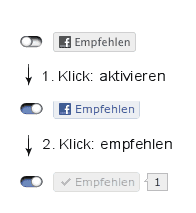
Fig. 2: Visual two-click solution
Integration with the Shariff Plugin
Shariff originated in Germany and is one of many plugins that enable privacy-friendly sharing and liking. The publishing house Heise Medien GmbH released the Shariff solution back in 2014 and has continuously developed it ever since. Many content management systems offer Shariff as a plugin, module, or extension. Alongside the two-click approach, Shariff provides an excellent, privacy-conscious alternative.
The key benefit is that users only connect with social networks when they actively choose to do so. Communication with the networks is handled by a specialized script that acts as an intermediary between the social platform and the visitor on your site.
Social Plugins Under the GDPR
Since May 25, 2018, handling personal data has required much greater care and continues to face strict scrutiny. It's wise to double-check whether your social plugins transfer sensitive data. Because this data can include IP addresses alongside names and email addresses, you should verify how well your social plugins protect user privacy or whether adjustments are needed. The GDPR has put social media on a shorter leash. To provide your visitors with a privacy-compliant website, keeping a close eye on proper implementation is essential.
Please note that this does not constitute legally binding advice; we are simply sharing helpful recommendations. For definitive legal guidance on complying with the GDPR, we recommend consulting data protection officers and media law attorneys. You can also find more insights on the GDPR and email marketing on our blog.
How Can We Help You?
If you'd like to integrate privacy-compliant social share buttons on your website, feel free to contact us. We're happy to guide you through the process.
Did you enjoy this article? Share it with others!
AUTHOR
Céline
Otto
Céline Otto has been part of the SEA team at internetwarriors since April 2022. She is highly knowledgeable in Social Media Marketing and Search Engine Advertising, and she always stays updated with the latest trends (not just in online marketing). Whether it's about increasing your company's reach and visibility or generating new leads, Céline is fully committed!
Comments on the post
no comments yet
Write a comment
Your email address will not be published. Required fields are marked with *
