

Blog Post
Search Engine Optimization

Julien
Moritz
published on:
Improve Internal Linking for SEO: A Guide to a Successful Strategy
Table of Contents
In the world of search engine optimization, there are countless strategies and techniques to improve a website's visibility. An often underestimated yet extremely effective method is optimizing your internal linking. Internal linking in SEO is used to connect different pages within a website. This plays a crucial role not only for navigation and user-friendliness, but also for distributing so-called "link juice," which boosts the authority and relevance of your pages in the eyes of search engines.
In this blog post, you'll discover how you can enhance your SEO strategy through smart, targeted internal linking. Learn the best practices to satisfy both your users and search engines, and ultimately boost your rankings. As a foundation for your internal linking strategy, our step-by-step guide will show you how to analyze your current setup and identify new opportunities.
Definition and Importance for SEO
Basically, there are two types of hyperlinks:
Internal links are connections that lead from your website to another page on your website. They help users navigate your site and assist search engines in understanding its structure and hierarchy. The big plus: you have 100% control over them.
External links, on the other hand, point from a completely different domain to your website or vice versa. They can boost your credibility, but you don't have full control here and are dependent on other sites.
In this blog post, we'll focus exclusively on internal linking. An important concept here is "link juice." Link juice refers to the equity or strength of a page. It's determined by the quality and quantity of inbound links, as well as how they're distributed across a website. As a result, the homepage usually holds the most link juice and can pass it along through internal links. Links from pages considered more important pass on more link power than links from less important pages. A page is considered important if many other authoritative pages link to it. That link power isn't distributed equally, either. For instance, if there are 100 internal links, they don't each get 1/100 of the link power—some links receive more, others less.
The SEO benefits are manifold. Internal links enhance the user experience by helping visitors find the information they need with ease. For search engines, internal links are a signal of which pages on your site are the most important. Pages that receive many internal links are viewed as particularly relevant and can rank higher in search results. Plus, internal links make it much easier for search engine crawlers to crawl and index your website, which in turn boosts the discoverability and visibility of your content.
Why It Matters for Users
Internal links benefit SEO in many ways. They improve the user experience by helping visitors easily find what they're looking for. For example, you can link to other products or services within the body text. This allows users to jump directly to that page via the link without having to hunt through the main navigation menu.
A well-thought-out internal linking setup can help increase the time users spend on your site. This dwell time can lead to better rankings in search results, as search engines factor user behavior into page evaluation.
Why It Matters for Search Engines
For search engines, internal links signal which pages on your site are the most important. Pages with high link juice are viewed as especially relevant and can rank higher in search results. In addition, internal links make it easier for search engine crawlers to explore and index your site, improving your content's discoverability and visibility.
Every now and then, we hear the idea of adding nofollow attributes to links to "save" link power. However, we advise against this. Even though the crawler won't follow the link, it's still recognized as one, and it's still factored into the total count when link power is distributed.
Practical Tips for Optimizing Your Internal Links
Here are some practical, actionable tips on how to improve your website's internal linking for better SEO. From identifying high-potential pages and choosing the right anchor texts to strategic link placement—these tips will help you unlock the full power of your internal links and sustainably boost your SEO performance.
1. Use Screaming Frog to Find Pages That Benefit Most from Extra Links
How do you find out which pages would benefit most from additional internal links? That's where Screaming Frog comes in. This powerful SEO tool lets you easily spot pages that are currently underlinked and offer great potential for more internal links. Especially for pages that already pull in good traffic but have relatively few links pointing to them, adding links is a fantastic way to boost their visibility and relevance in search results.
First, set up an API connection with Google Search Console:
1. Configuration → API Access → Google Search Console
2. Sign in and select your domain → OK
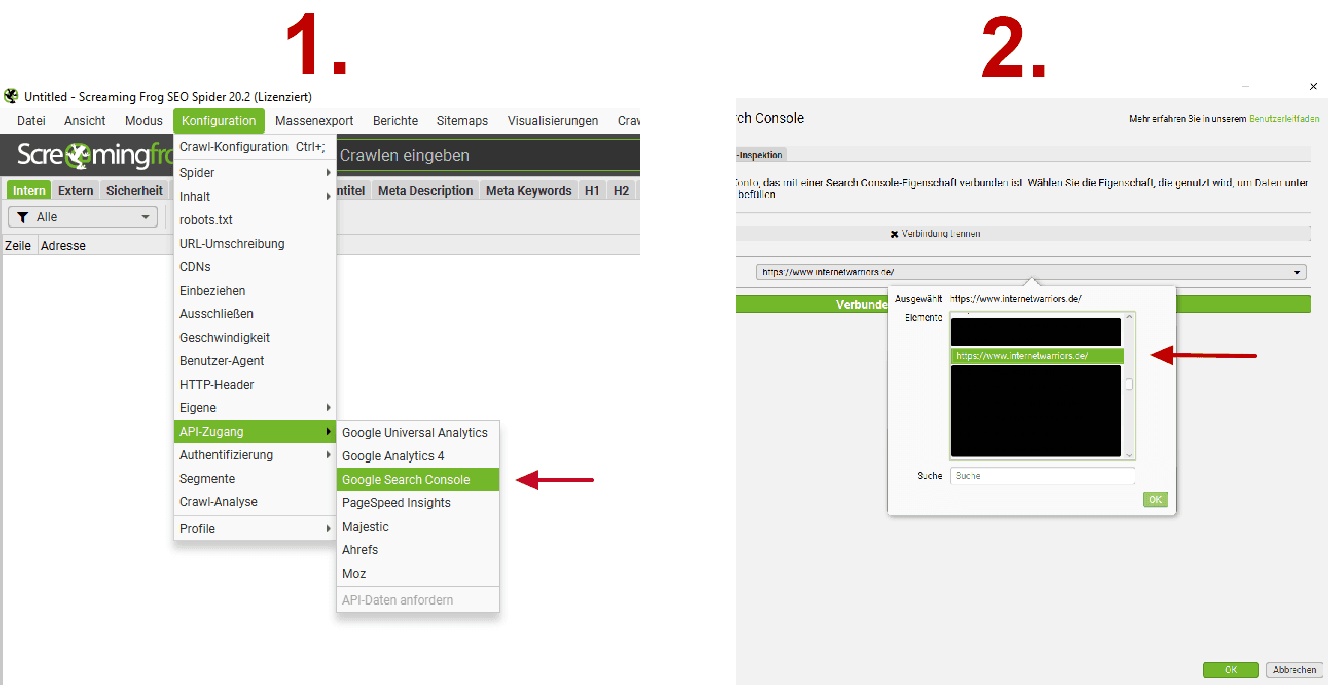
Figure 1: Screaming Frog guide: Setting up API access
Next, start the domain crawl and filter the dataset down to the relevant data:
1. Internal → HTML
2. Select the following columns: Address, Meta Robots 1, Inlinks, Impressions
3. Filter: Meta Robots 1 → does not contain → "noindex"
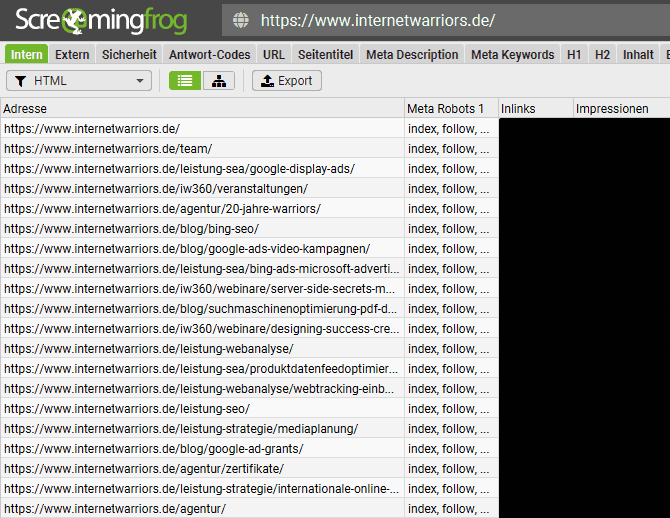
Figure 2: Screaming Frog dataset
Once the crawl is done, you should have a manageable list of pages. Now, look at the ratio between inlinks and impressions. The most interesting pages for optimization are those with lots of impressions, but few inbound links. For these pages, optimizing internal links is a great way to harvest low-hanging fruit (threshold keywords).
If the list of URLs feels overwhelming, you can export the data and create a quick chart in Excel.
2. Using Internal Links Within Page Content
When placing links within your text, anchor text (or link text) is key. Avoid generic phrases like "Click here" or "Learn more." Anchor text should tell both your users and search bots what to expect on the linked page. That's why the linked text should match the target page's target keyword as closely as possible. However, we don't recommend using the exact same anchor text every single time, as that can look unnatural. Instead, use variations and synonyms—mix it up with individual words, short phrases, or even entire sentences paired with keywords.
Placement matters, too. In-text links carry the most weight. The surrounding context tells users and bots exactly how the link is relevant. The higher up on the page a link appears, the more important it seems. Of course, you can still use buttons, as they're great for user-friendliness—just make sure they feature descriptive link text. You can also link images; in that case, using alt attributes and descriptive image titles is especially important. Alt text helps search bots "see" what's in the image and hints at what the target page is about.
3. Using Internal Links in Your Navigation
Site navigation primarily consists of the main menu and the footer. Since navigation is accessible from every page, its links appear site-wide. Your most important pages should definitely be in the main menu, as this placement channels significant link power to them. Don't overlook footer links either, but keep in mind that the footer isn't meant to hold dozens of links. Duplicating main menu links in the footer doesn't make much sense, and these links pass less link juice anyway since they're less likely to be clicked.
Seasonal pages should be well-linked internally ahead of time. If a topic becomes relevant in 5–6 months, you can start by linking the target page in the footer. But 2–3 months beforehand, give it a more prominent spot—like in the main menu, on the homepage, and within relevant content—to signal to search engines that this page is currently top priority.
We also recommend adding breadcrumbs for effortless navigation. Breadcrumb links show the hierarchical depth of the current page and allow users to jump back to parent categories with just a click. They're super user-friendly and naturally increase your domain's internal link count.
4. Quality Over Quantity
There's no magic number for internal links on a webpage. What really matters is that links are relevant and make sense. If you stick to this principle, you won't have to worry about having "too many" internal links. With every link, just ask yourself: Will this genuinely interest the reader? If the answer is yes, you've got a valuable, relevant link.
If you're building an internal linking strategy from scratch, keep the concept of siloing in mind. Siloing is all about topical relevance. Following this principle, a visitor on a product page for soccer cleats shouldn't see links to "T-shirts" or "Pants," as those probably aren't relevant right then. Instead, it makes much more sense to link to another brand of soccer cleats, since the user is clearly interested in that specific type of product. Internal links should stay focused within the current category and ideally only point to the main landing pages of other categories.
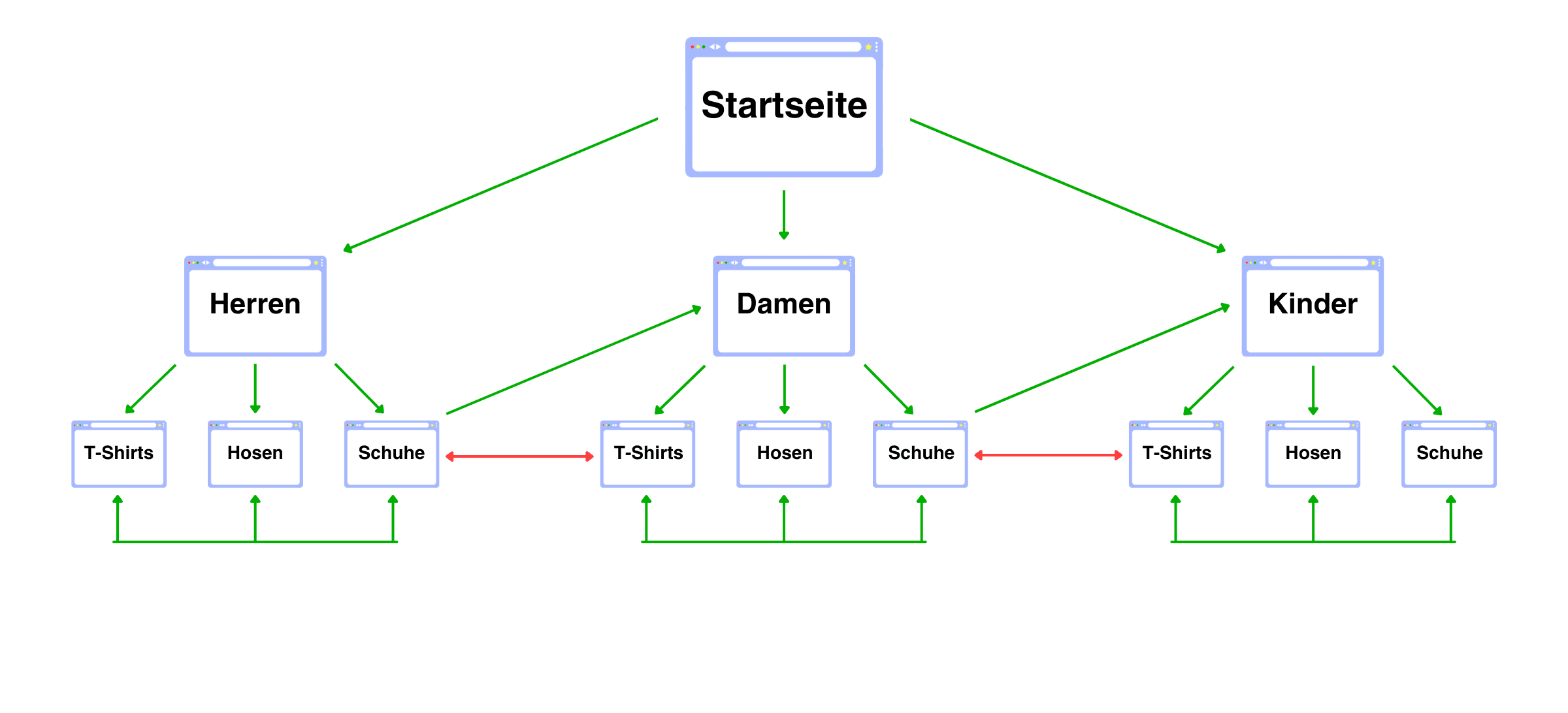
Figure 3: Siloing – topical internal linking
Internal Linking & SEO: The internetwarriors Takeaway
Optimizing internal links is a vital yet often overlooked part of any strong SEO strategy. By using targeted internal linking, you can significantly boost both user experience and your pages' visibility and relevance for search engines. Thoughtful internal linking streamlines site navigation, distributes link juice efficiently, and helps search engines understand your site's structure. Practical tactics like using tools such as Screaming Frog, choosing smart anchor texts, and maintaining topic-focused links are essential to success. Overall, well-optimized internal links keep users engaged longer and help you climb the search rankings.
We'd love to help you build an effective SEO strategy for your internal linking. Through an in-depth SEO audit, we can uncover your website's hidden potential, define concrete action items, and implement them together with ongoing SEO consulting. Get in touch with us anytime for a free, no-obligation quote!
Enjoyed this post? Feel free to share it!
Julien
Moritz
Since October 2023, Julien Moritz has been bringing fresh energy to the internetwarriors' SEO team. With his strong interest in online marketing and passion for SEO strategies, he helps businesses enhance their digital presence. His determined and solution-oriented approach enables internetwarriors' clients to achieve their goals.
Comments on the post
no comments yet
Write a comment
Your email address will not be published. Required fields are marked with *
